Australian skilled migration is based on a scoring system. As long as the applicant's occupation ranks on the list of scarce occupations for Australian immigration and meets the minimum EOI score of 65, they have the opportunity to obtain permanent residency (PR) in Australia through 189, 190, or 491 skilled migration visas.
In 2025, the Australian government will continue to promote the reform of skilled migration, and the demand for skilled personnel in various states will continue to grow. The difficulty of applying for different visa categories will also be adjusted. This article will provide a detailed analysis of the application requirements, career assessment requirements, scoring rules, and bonus strategies for the three major skilled immigration visas in Australia (189, 190, 491), in order to help applicants enhance their competitiveness and successfully obtain an Australian green card!
1、 Three major visa categories for Australian skilled immigrants
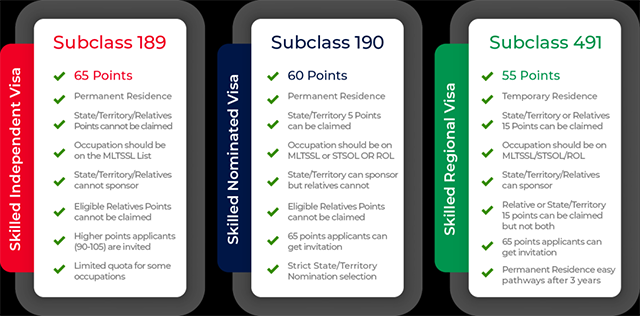
189 Skilled Independent Visa
**Features: * * One step to get PR, no need for employer or state government guarantee, free choice of residence city.
Suitable for:
Having a scarce profession with high scores (usually above 80 points is more competitive).
I am unwilling to be limited by specific state guarantees and hope to have flexibility in choosing my place of residence.
Application requirements:
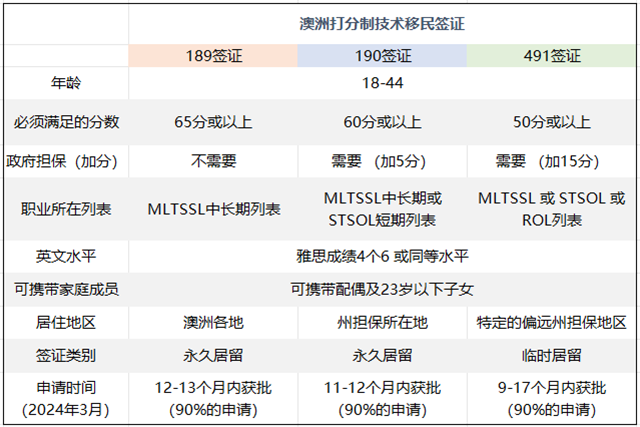
The occupation must be on the MLTSSL (Medium to Long Term Shortage Occupation List)
EOI score 65 points or above (but actual invitation score usually needs to be 80+)
Under 45 years old
IELTS 4 out of 6 (or equivalent scores such as PTE or TOEFL)
Through career assessment
Meet the requirements of health and criminal record
Trend in 2025: Due to fierce competition for the 189 visa, it is expected that popular professions such as IT, engineering, and healthcare will still have invitation scores above 80 points. It is recommended that applicants plan their bonus points in advance.
2. 190 State Sponsored Skilled Nominated Visa
Features: Requires state government guarantee, one-step PR, can earn an additional 5 points.
Suitable for:
Low EOI score (such as 65-75), but willing to accept specific state residency requirements.
I hope to increase my chances of being invited and earn additional points through state government guarantees.
Application requirements:
L occupation needs to be on the 190 occupation list in each state
EOI score 60 points or above (5 points can be added for state guarantees)
Received an invitation from the state government
Under 45 years old
IELTS 4 out of 6 (or equivalent scores such as PTE or TOEFL)
Meet the requirements of health and criminal record
Trend in 2025: The 190 guarantee policies in various states are adjusting rapidly. It is recommended that applicants pay attention to the latest occupational list in each state and choose a state guarantee strategy that suits them.
3. 491 Remote Area State Sponsored Skilled Work Regional Visa
Features: Valid for 5 years, can be transferred to a 191 permanent residence visa after working and living in a remote area for 3 years, with an additional 15 points for state sponsorship.
Suitable for:
Low scores (such as 50-65), but willing to settle in remote areas of Australia.
I hope to quickly increase my chances of being invited through a 491 visa and ultimately switch to permanent residency.
Application requirements:
L occupation needs to be on the 491 occupation list
EOI score 50 points or above (state guarantee can add 15 points)
Obtain sponsorship from the state government or relatives
Under 45 years old
IELTS 4 out of 6 (or equivalent scores such as PTE or TOEFL)
Meet the requirements of health and criminal record
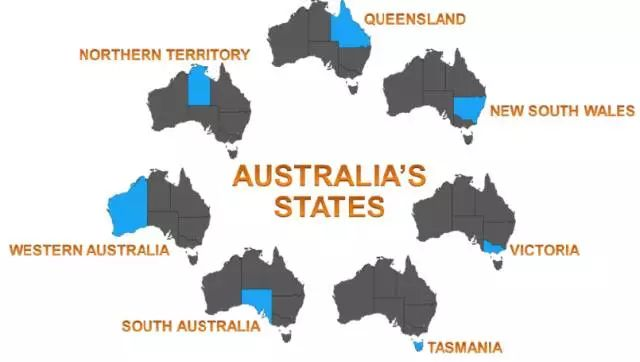
Trend in 2025: The Australian government encourages immigrants to travel to remote areas, and the 491 visa remains one of the most invited skilled immigration visas. It is recommended that applicants consider remote areas such as Tasmania, South Australia, and Northern Territory as their first choice.
2、 Analysis of the Occupational List for Australian Skilled Migration
1. MLTSSL (List of Medium - and Long Term Technical Occupations)
I can apply for 189, 190, and 491 visas
Suitable for engineering IT、 High demand industries such as healthcare, construction, and education
2. STSOL (List of Short term Occupations)
Only applicable to 190 state guarantees and 491 remote area guarantees
For example, professions such as marketing, accounting, and food and beverage management
3. ROL (Remote Area Occupational List)
Only applicable to 491 remote area visa
For example, professions in remote areas such as agriculture, nursing, and hotel management are in short supply

3、 Career assessment is the first step in technical immigration
Career assessment is a necessary step in applying for Australian skilled migration, and different professions are reviewed by different assessment agencies, such as:
IT related professions - ACS (Australian Computer Society)
Engineering profession - EA (Institution of Engineers Australia)
Accounting related professions - CA, CPA, IPA
Most general occupations - VETASSESS
Applicants need to match suitable evaluation agencies based on their educational background and work experience, and prepare materials as required.
4、 EOI Scoring Rules and Bonus Points Strategy
1. Age (up to a maximum of 30 points)
25-32 years old can receive an additional 30 points
33-39 years old can receive an additional 25 points
Only 15 points will be added for those aged 40-44
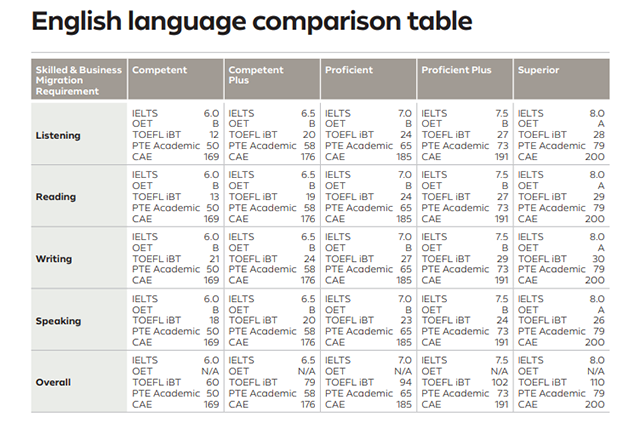
2. English score (up to a maximum of 20 points)
IELTS 4 out of 6 (0 points)
IELTS 4 out of 7 (10 points)
IELTS 4 out of 8 (20 points)
3. Work experience (up to a maximum of 20 points)
3-5 years of work experience outside of Australia: 5 points
5-8 years of work experience outside of Australia: 10 points
More than 8 years of work experience outside of Australia: 15 points
1-3 years of work experience within Australia: 5 points
3-5 years of work experience within Australia: 10 points
5-8 years of work experience within Australia: 15 points
More than 8 years of work experience within Australia: 20 points
4. Educational background (up to a maximum of 20 points)
Doctoral degree: 20 points
Master's/Bachelor's degree: 15 points
Junior college degree: 10 points
5. Additional bonus points
STEM master's/doctoral degree: 10 points
Spouse's English proficiency or vocational assessment for skilled immigrants: 5-10 points
NAATI certification for community language: 5 points
Studying in remote areas for more than 2 years: 5 points
5、 How to improve EOI score and increase invitation rate?
Improving English scores: A score of 4 out of 7 in IELTS can add 10 points, and a score of 4 out of 8 can add 20 points, which is the most effective way to score extra points.
Applying for state sponsorship: 190 can add 5 points, 491 can add 15 points, and low score applicants are preferred.
Accumulate work experience: Both domestic and international work experience in Australia can earn extra points. It is recommended to plan career development as early as possible.
Consider studying or working in remote areas: Some states offer additional points, and 491 remote area sponsorship is the best choice for low scoring applicants.
Summary: Australian skilled migration is still a golden opportunity, and early planning is key!
Australia's 189, 190, and 491 skilled immigration programs remain the most cost-effective immigration options, but as the number of applicants increases and competition intensifies, it is recommended that applicants plan career assessments, language exams, and state sponsorship strategies in advance to maximize their EOI scores and increase their chances of success in being invited.
2025 is the golden window for applying for skilled immigration in Australia. If your occupation meets the shortage list, now is the best time to launch the immigration program!